

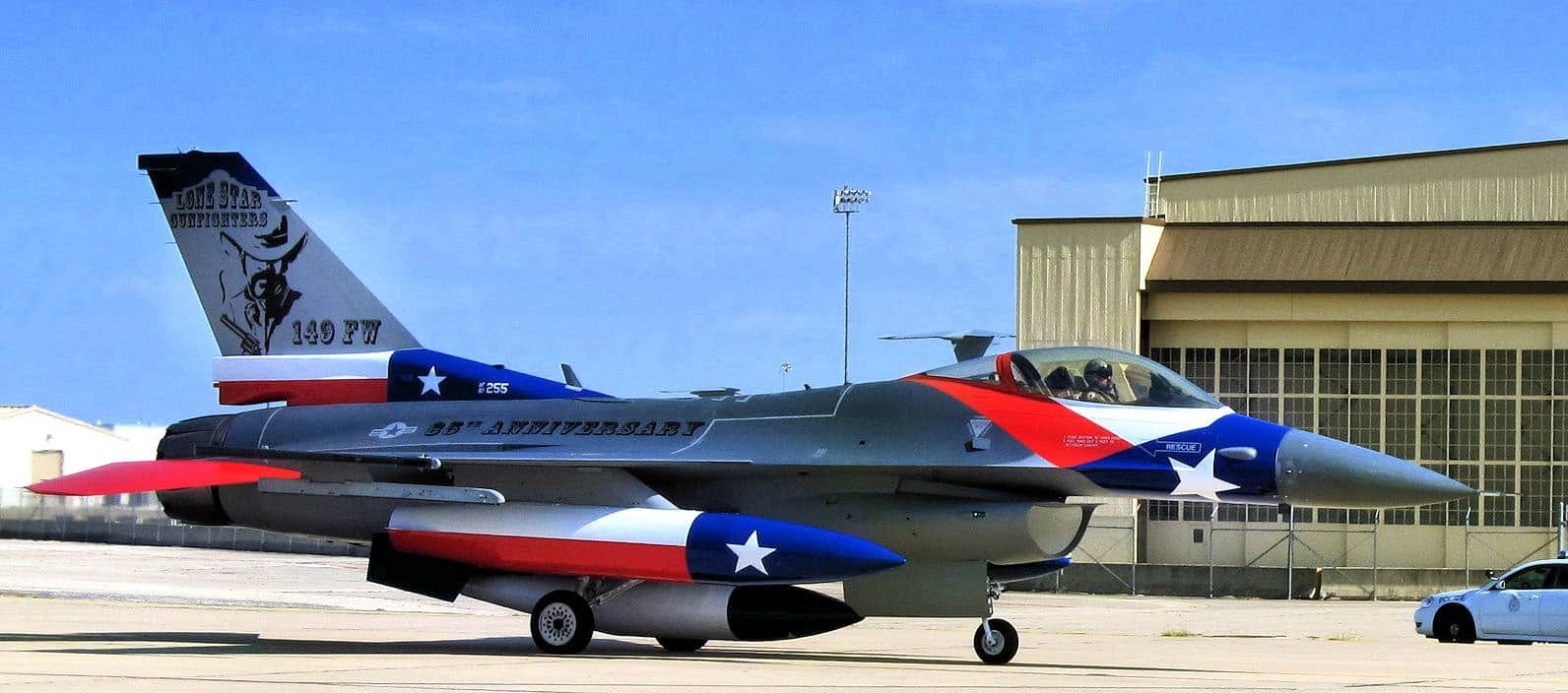
The order to fire on Texas cannot be carried out.
With more than 200,000 Texans in uniform, Washington could not get compliance, and a Texan who took up arms against Texas would be committing treason under our own Constitution. Bases stay under treaty. The Texas Military Department already exists.
On this page
What people are actually worried about
When someone asks “what about the military?”, they are usually asking one of three different questions, and the answers are not the same.
Question 1: Would the United States invade Texas to stop independence?
No. And the reason is not wishful thinking. It is that the order could not be carried out.
Start with consent. A July 2022 SurveyUSA poll, from the firm FiveThirtyEight rates A+ with the least partisan bias of any pollster it tracks, found that 60 percent of Texas adults, and 66 percent of likely voters, support Texas peacefully becoming an independent country. Military action against Texas, absent some morally reprehensible act, would require a strong national consensus that simply does not exist. Strong liberal states would likely be glad to let Texas go. Strong conservative states would largely back the basic principle of self-government. There is no consensus to be had.
Most Texans support independence
Fig. 1 · Consent · SurveyUSA, July 2022 (n=625 in Texas). Support for Texas peacefully becoming an independent country. Rated A+ by FiveThirtyEight.
Then there is the rest of the world. Using force against a people who voted to govern themselves would bring swift international condemnation, likely economic sanctions until Texas’s civilian government was restored, and a lasting blow to American credibility, delegitimizing every past and future U.S. appeal to self-determination.
But the decisive fact is closer to home, and it is the point the fear-mongers most want you to miss.
You would have to believe that troops would obey an order to fire on millions of Texas civilians and their elected leaders, whose only crime was invoking their right of self-government. With more than 200,000 Texans serving in the United States armed forces, getting that compliance would be all but impossible. These are people’s sons, daughters, neighbors, and friends. The chain of command runs through human beings who are themselves Texan.
And there is a hard legal edge to it. Any Texan in the U.S. military who took up arms against the lawfully elected government of Texas or its citizens would be guilty of treason under Article 1, Section 22 of the Texas Constitution. That is not rhetoric. That is the written law of this state, and every Texan in uniform would know it.
The numbers go further still. A Zogby poll reported in Forbes found that 42 percent of members of the armed forces, and 41 percent of those with a family member serving, agree that secession is a right. When 42 percent of the force already views this as a fundamental freedom, on par with speech or religion, the most likely outcome of an order to suppress Texas is not obedience. It is refusal, from the highest ranks down to the enlisted. And if Washington were reckless enough to try anyway, it would risk a domino effect: other states, outraged at the trampling of the political will of Texans, skipping straight to the end of the process and declaring their own independence. Texas might be the first to leave. If the federal government used force to stop it, Texas would not be the last.
Texans serve in the U.S. armed forces. An order to turn them against Texas is one they would refuse to carry out, which is why Washington will not give it.
Fig. 2 · The decisive fact
Question 2: What happens to U.S. military bases on Texas soil?
Most of them stay, under treaty. And keeping them is in everyone’s interest.
Texas hosts more federal defense spending, about $72 billion a year, than any other state, across installations like Fort Hood, Joint Base San Antonio, and Fort Bliss. Independence does not require closing them. The United States already maintains nearly 800 bases in more than 70 countries and territories abroad, and no one pretends those 70 nations are in political union with America because a base sits on their soil. The bases exist for shared defense and security interests, nothing more.
in federal defense spending flows through Texas every year, the most of any state. Independence keeps the bases open, under a mutual-defense treaty, not closed.
Fig. 3 · The bases
After independence, Texas and the United States would no longer share a government, but they would still share defense and national security concerns. So the likely outcome is a mutual defense pact that includes joint use and operation of existing bases and facilities in Texas, much like the Status of Forces Agreements every NATO host already has. As part of such a pact, Texas would likely pledge to spend a set percentage of GDP on defense, and in return the U.S. would guarantee tariff-free access to military arms and equipment for manufacturers on both sides. The negotiation is detailed. The outcome is normal. It is what shared-defense partners do everywhere on Earth.
Question 3: What does Texas do for its own defense?
Texas already has a military. This is not a body that has to be conjured up after a vote. It exists today.
The Texas Military Department (TMD) is composed of the three branches of the military in the State of Texas: the Texas Army National Guard, the Texas Air National Guard, and the Texas State Guard. All three are administered by the state adjutant general, an appointee of the governor, and fall under the governor’s command. The Texas State Guard is exclusively under the governor’s command, organized into army regiments, air wings, maritime regiments, and medical battalions. The Texas Army National Guard fields the 36th Infantry Division, the 71st Troop Command, and the 176th Engineer Brigade. The Texas Air National Guard fields the 149th Fighter Wing, the 147th Attack Wing, and the 136th Airlift Wing.
On Day 1 of independence, these formations do not have to be built. They are already in Texas uniforms, already under a chain of command that runs to Austin. Over time, building on the existing infrastructure of the Texas Military Department, Texas would grow the components of the TMD into a force capable of meeting any threat to the safety and security of Texas. (If, somewhere down the road, Texas chooses to rename a fully sovereign TMD, that is a flag and a letterhead. The institution, the soldiers, and the command structure are already here.)
Scaling the force to Texas
An independent Texas would scale its forces to its actual threat environment, which is not Russia’s, not Israel’s, not South Korea’s. It is closer to Canada’s or Australia’s. The right structure is a standing force and a Guard component sized against peer nations of similar population and threat profile, not against great-power militaries. The specific force structure is a decision for the future Texas Legislature and Texas’s defense leadership, not a number to lock in here.
A mutual defense pact can set a transition period where things essentially stay as they are now, operating under joint command, until the Texas Military Forces are at full readiness. That funding path would also let Texas increase its inventory over time: naval vessels, fighters and support aircraft, armored vehicles.
The Texans already in uniform
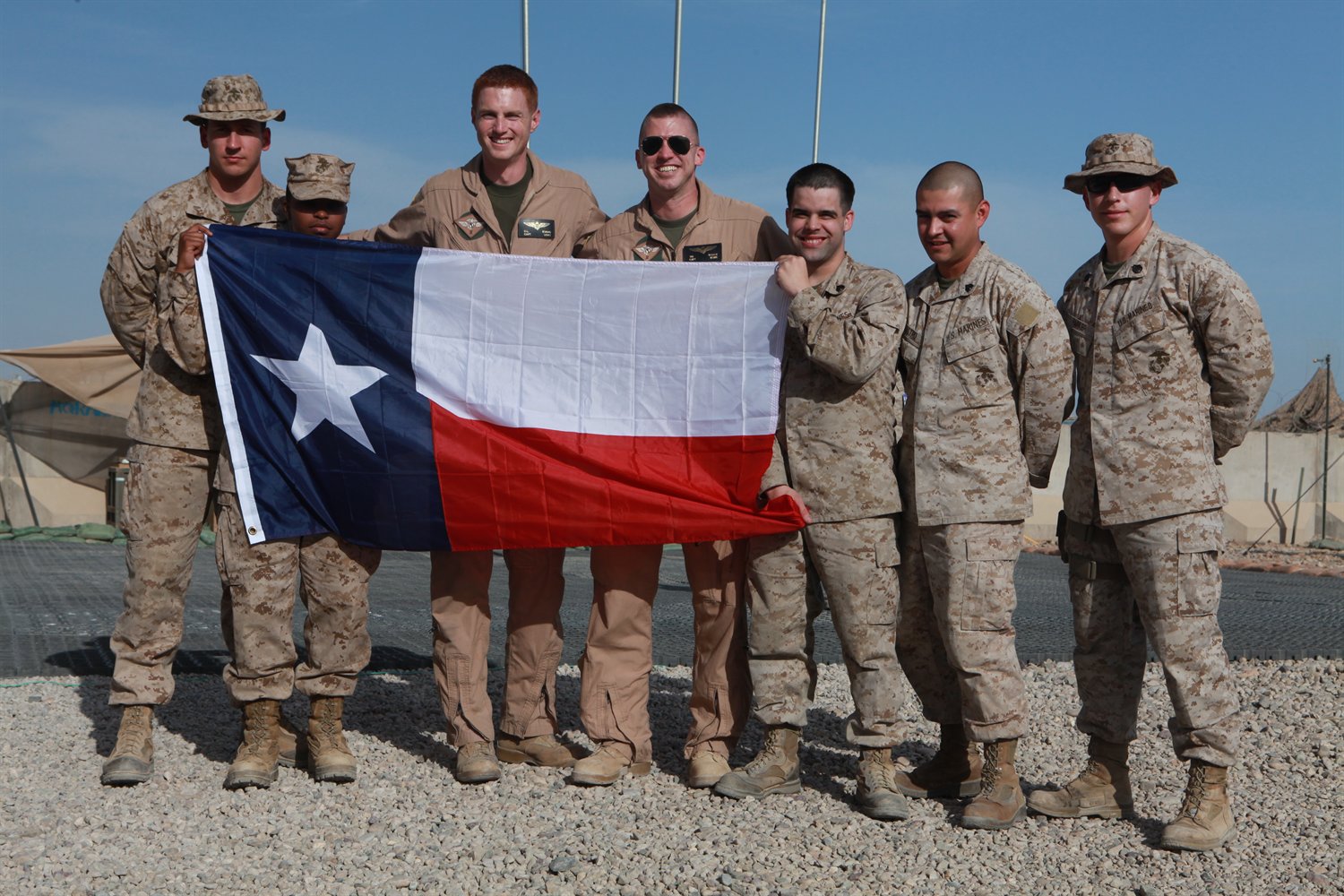
There is the question of the now-foreign Texans serving in the U.S. military on Day 1. This is a solved problem, not a novel one. There is already federal policy governing non-citizens in the armed forces: more than 8,000 non-citizens enlist every year, and existing treaties already let citizens of the Federated States of Micronesia, the Marshall Islands, Palau, and Canadian citizens of Native American heritage serve. It is reasonable to assume the U.S. would extend that same existing framework to cover the roughly 150,000 Texans currently on active duty, and any Texans who wish to serve in the future.
For those who would rather come home, the model is the same one used in the post-Soviet military transitions: a real choice with no penalty. Voluntary transfer to Texas service with rank equivalence, continued U.S. service stationed outside Texas, or honorable separation.
Veterans
This question comes up almost as often as Social Security, and the answer has the same shape. Every U.S. veteran benefit owed to a Texan is honored under the transition treaty, paid under negotiated terms. VA hospitals in Texas stay operational. Some transfer to Texas operation, others remain under U.S. operation on terms equivalent to a Status of Forces Agreement. Care continues uninterrupted.
The honest uncertainties
No serious case pretends the military transition is simple. There are real open questions: the precise terms of the intelligence-sharing relationship, the structure of Texas’s coastal and border defense, the exact shape of the mutual defense pact. Those are hard engineering problems.
What is not in doubt is the underlying capacity. Texas has the personnel. Texas has the installations. Texas has the budget. Texas already has the institutional knowledge inside the Texas Military Department. The hardest fact in this entire debate is the simplest one: an order to turn the United States military against Texas is an order that more than 200,000 Texans in uniform would refuse to carry out. That is why Washington will not give it.
Sources & further reading
The military facts
- Texas Military Department: Texas Army National Guard, Texas Air National Guard, Texas State Guard
- More than 200,000 Texans serve in uniform: roughly 150,000 on active duty, tens of thousands in the federal Reserves, and over 24,600 in the Texas Military Department
- Texas is the No. 2 home-of-record state in the U.S. military, supplying about 11.7 percent of active-duty enlistees (DoD Population Representation in the Military Services, FY2021)
- Texas Constitution, Article 1, Section 22 (treason against the State of Texas)
The polling
- SurveyUSA (July 2022, n=625 in Texas): 60 percent of Texas adults, and 66 percent of likely voters, support Texas peacefully becoming an independent country. FiveThirtyEight rates SurveyUSA A+, with the least partisan bias of any pollster it tracks. The exact question wording and cross-tabs are on the polling page.
- Zogby International (2009), reported in Forbes: 42 percent of armed forces members and 41 percent of military families agree secession is a right
The full treatment
- Daniel Miller, TEXIT: Why and How Texas Will Leave the Union, Chapter 4 (“Project Fear”) and Chapter 7 (“Becoming Independent”)
Questions this page answers
- Does TEXIT mean Texas wants war with the United States?
- Would TEXIT be peaceful?
- What stops the federal government from simply ignoring the vote?
- What does history actually say about whether this can stay peaceful?
- What happens to military pensions?
- How will an independent Texas defend itself?
- What will happen to all of the U.S. military bases after TEXIT?
- What will happen to Texans serving in the United States military after Texit?
- All questions
Read next
What this week means for Texas, and what to do about it.
Every week, Daniel Miller picks the two or three stories that actually moved Texas independence, tells you what they mean, and names one thing you can do about it. Short enough to finish in one sitting. No press releases, no filler. Add your name.
We send one email a week. Unsubscribe in one click. Your email won’t be sold. Ever.