


Was Texas a Country?
Yes. Texas was an independent nation for almost ten years, from 1836 to 1845. This is the Republic of Texas, and why it still matters.
On this page
Texas was an independent country for almost ten years. From 1836 to 1845 it was a sovereign nation with its own president, its own congress, its own army and navy, its own money, and its own ministers abroad. It was not a colony, a territory, or a province of a larger power. It was the Republic of Texas, a sovereign state in its own right, and other countries dealt with it as one.
A recognized nation
After winning independence from Mexico at San Jacinto in 1836, Texas set up a government and went looking for recognition. It got it. The United States recognized the Republic in 1837. France followed in 1839. Britain and the Netherlands signed treaties of trade and friendship soon after. Texas sent diplomats to Washington, London, and Paris and received theirs in return. A nation is a people other nations treat as equals, and by that test Texas qualified.
The Republic moved its capital to a new town on the Colorado River and named it Austin. It ran a post office and printed its own money. It held a border against Mexico and Comanche raids. It also ran up debt and argued hard over its own direction, the way young countries do.
Its presidents
- David G. Burnet, interim president, from March 1836 until Sam Houston took the oath of office on October 22, 1836
- Sam Houston, 1836 to 1838
- Mirabeau B. Lamar, 1838 to 1841
- Sam Houston again, 1841 to 1844
- Anson Jones, 1844 to 1846, the last president of the Republic
Its flags
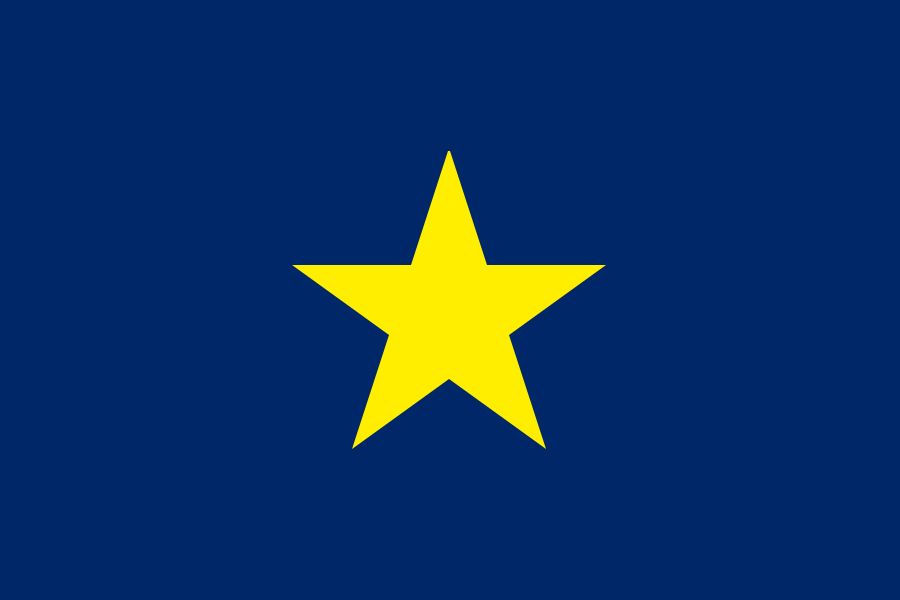
The Republic flew two national flags. The first was a single gold star on an azure field. It’s known as Burnet’s flag because David G. Burnet proposed it, and Congress adopted it and President Houston approved it on December 10, 1836.
On January 25, 1839, Congress replaced it with the Lone Star Flag: a blue vertical stripe carrying a white star, beside bars of white and red. Texas still flies it.

Its borders
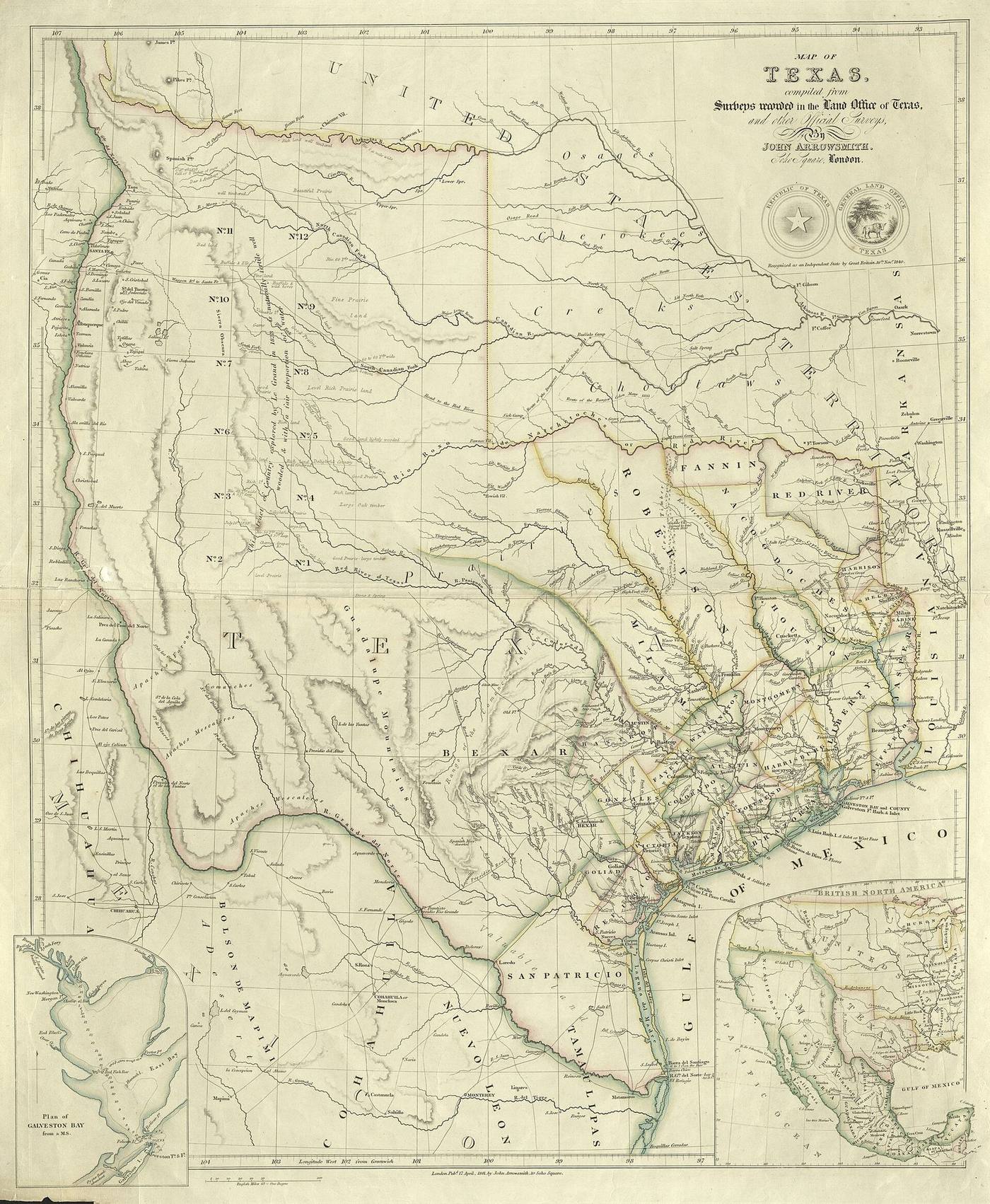
The Republic’s First Congress set its boundary on December 19, 1836: the Rio Grande from its mouth to its source, then a line due north to the forty-second parallel. The claim took in much of what is now New Mexico, and New Mexicans protested it. The dispute outlasted the Republic and was settled only by the Compromise of 1850, which drew the western and northern lines Texas has today.
Its money
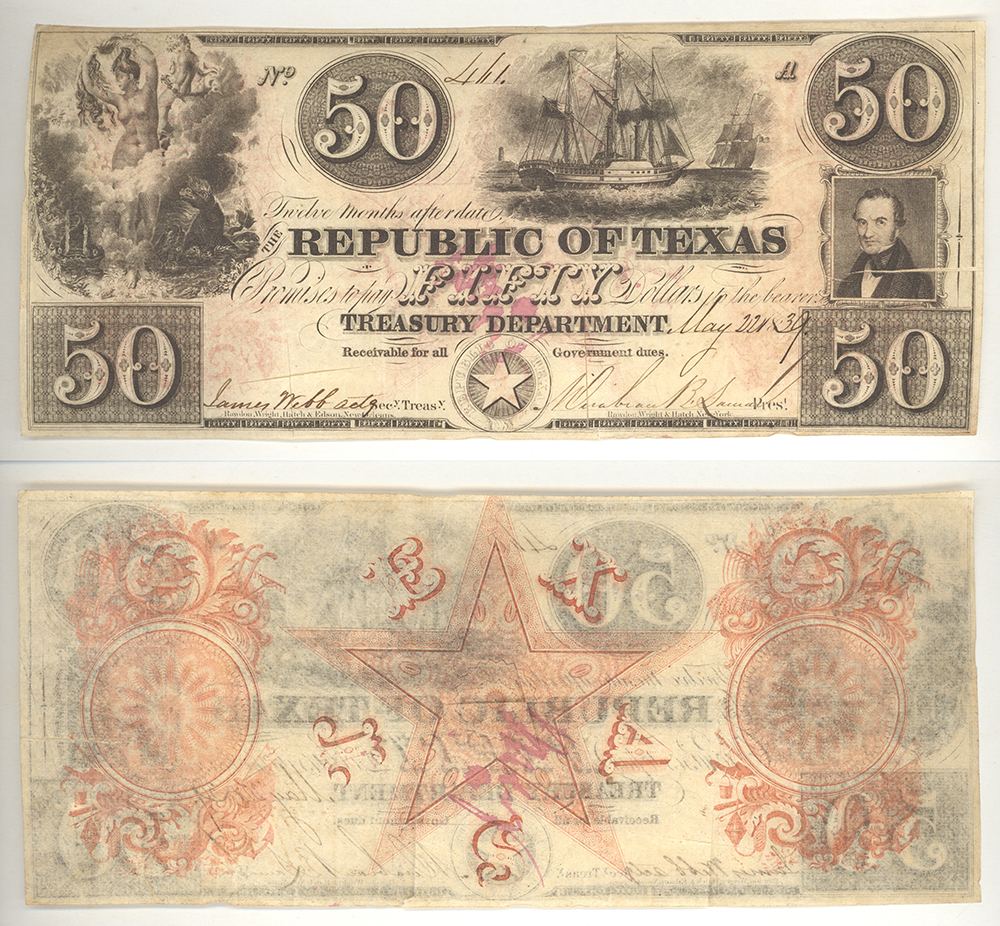
The Republic printed its own paper money. On January 19, 1839, Congress approved non-interest-bearing notes that Texans called red-backs. The treasury issued about $2.8 million of them, and within three years they were worthless. The movement’s answer to that history is sound money: it backed HB 1056, the 2025 law making gold and silver legal tender in Texas.
How it ended
Texas did not lose its independence. It voted to give it up. Annexation had been a live question for years, and in 1845 the United States offered terms and Texas took them. A Texas convention approved annexation, voters ratified it that fall, and on December 29, 1845, Texas entered the union as the 28th state. The first country to recognize Texas was the one that took it in.
Texas joined the union by consent, through a vote. It was a country that decided its own future.
Why it matters now
A people who governed themselves once can ask whether to do it again. That is the argument of the Texas Nationalist Movement: that Texas has the size, the economy, and the record of an independent nation, and that the question belongs to Texans, settled by a lawful vote of the people. Texas is the world’s eighth-largest economy. It was a country before. 692,012 Texans are on record asking to put the question to a vote.
Texas was a country. The case the movement makes is that it can be one again, and that this time the decision runs through a ballot rather than a battlefield.
What this week means for Texas, and what to do about it.
Every week, Daniel Miller picks the two or three stories that actually moved Texas independence, tells you what they mean, and names one thing you can do about it. Short enough to finish in one sitting. No press releases, no filler. Add your name.
We send one email a week. Unsubscribe in one click. Your email won’t be sold. Ever.